Category: Useful Information
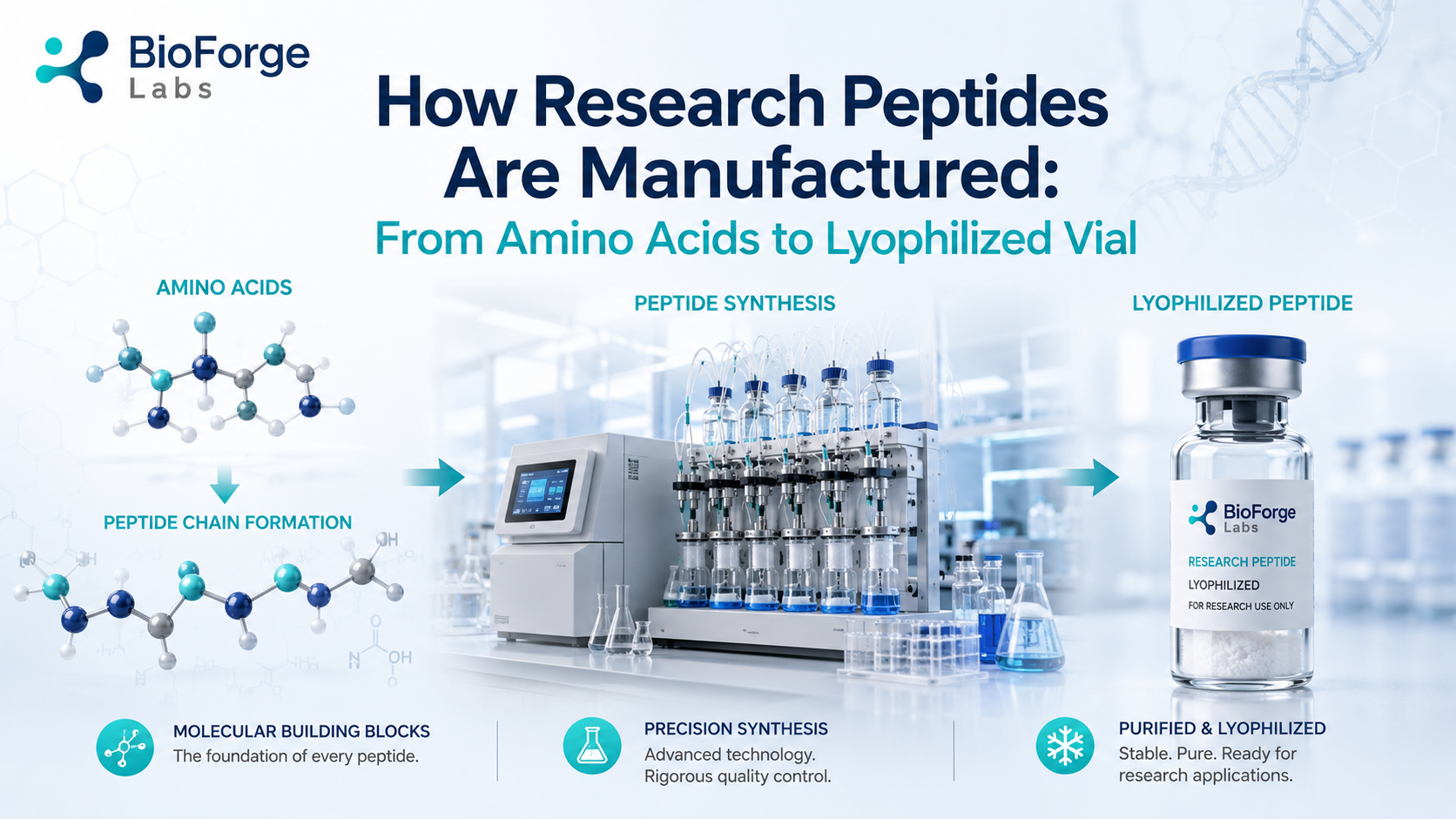
How Research Peptides Are Manufactured
This guide outlines the manufacturing process of research peptides, primarily produced through Fmoc solid-phase peptide synthesis (SPPS). Key steps include peptide assembly, purification via HPLC, and lyophilization. Quality control is crucial, as impurities can arise at each stage. Independent testing and proper handling are essential for reliable research materials in Australian laboratories.
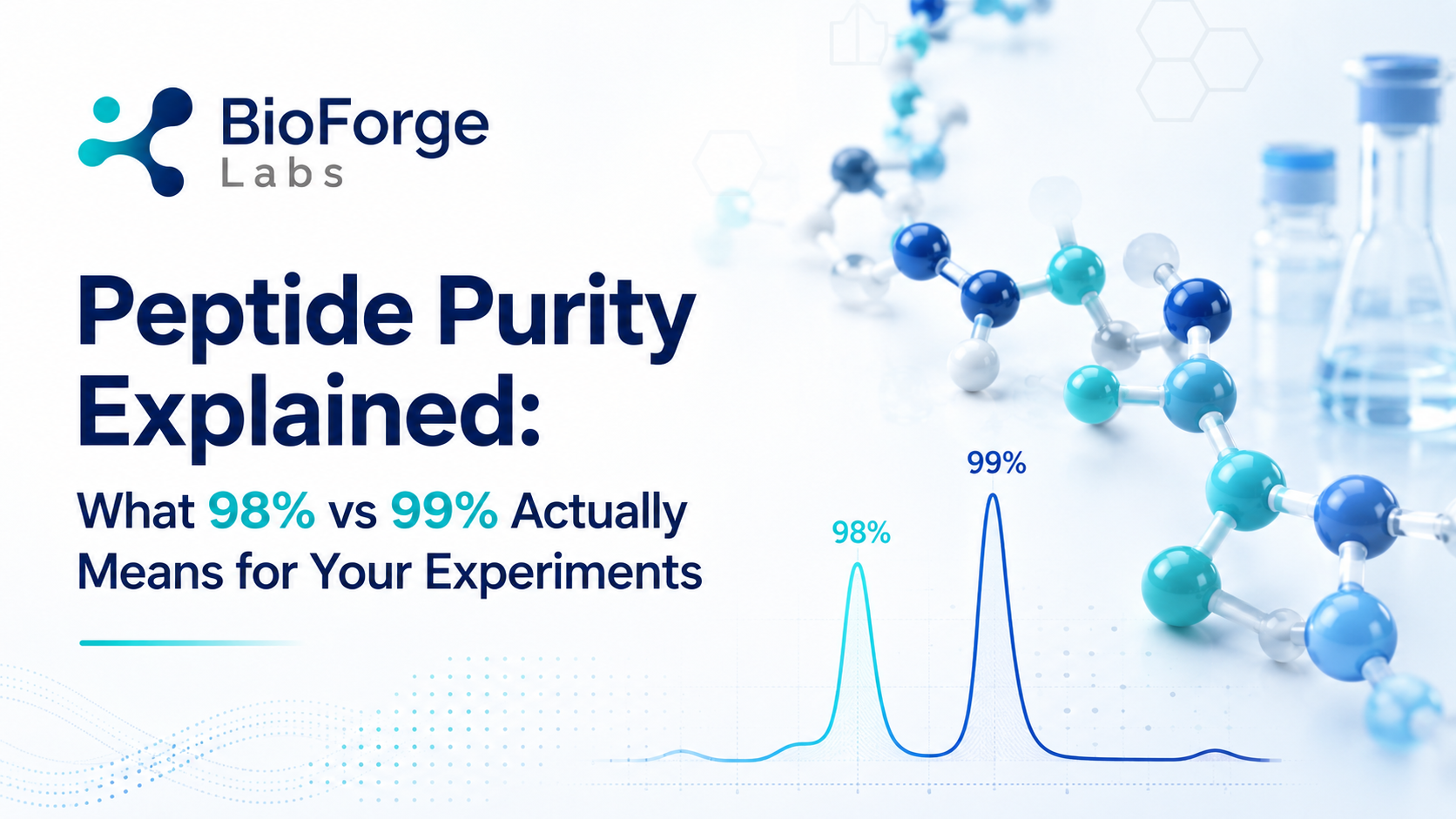
Peptide Purity Explained: What 98% vs 99% Actually Means for Your Experiments
This guide clarifies peptide purity, often reported as ≥98% or ≥99%, emphasizing its measurement via HPLC and the distinction between HPLC purity and net peptide content. It stresses the importance of independent verification, accurate interpretation of purity numbers, and proper storage for reliable laboratory results, particularly in sensitive experiments.
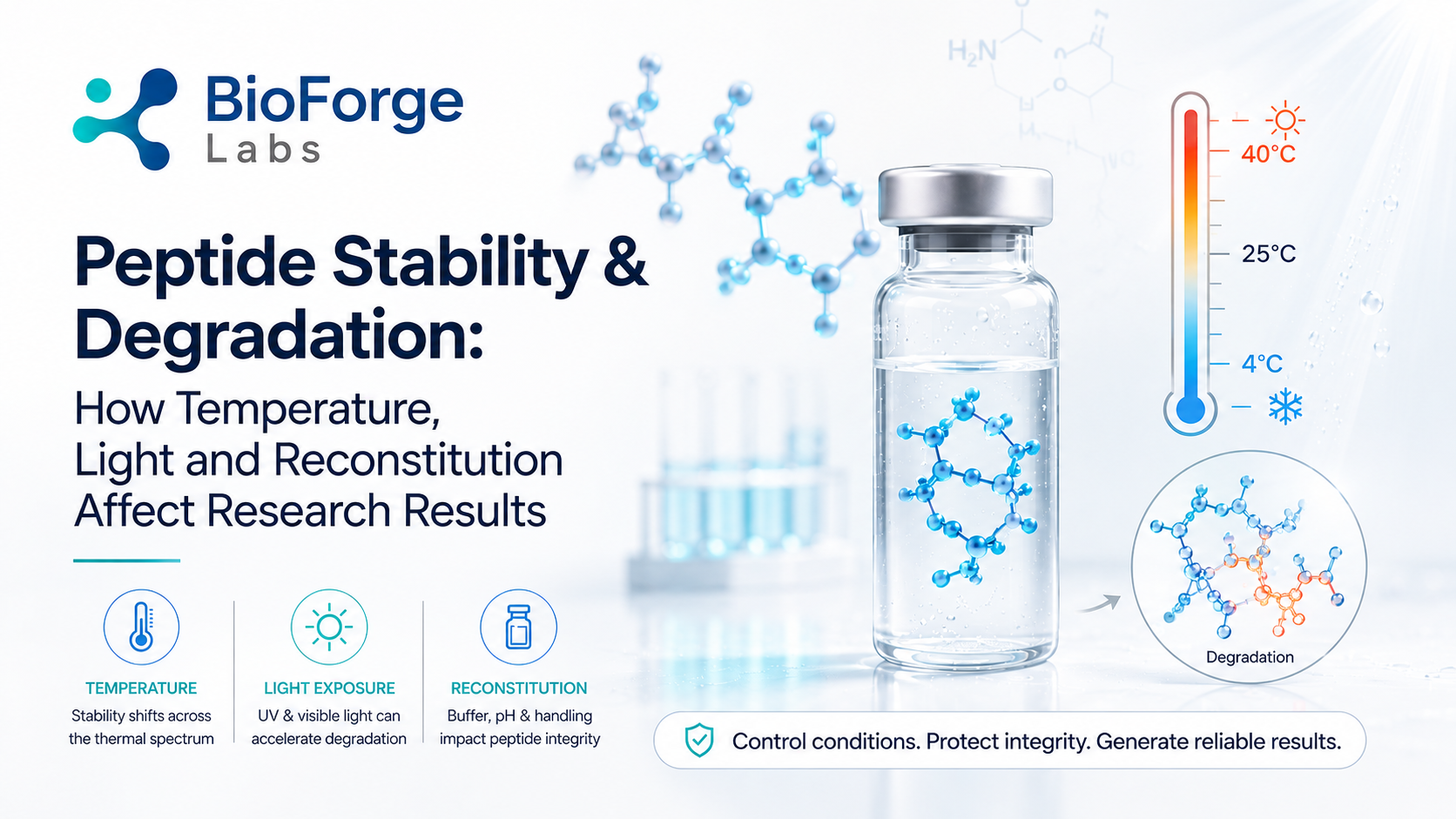
Peptide Stability & Degradation: How Temperature, Light and Reconstitution Affect Research Results
Peptide stability is crucial in research, where degradation can compromise purity and results. Factors like temperature, light, and reconstitution practices significantly influence stability. This guide details major degradation pathways, practical storage recommendations, and best practices for maintaining peptide integrity, especially for Australian laboratories, to ensure reliable experimental outcomes.
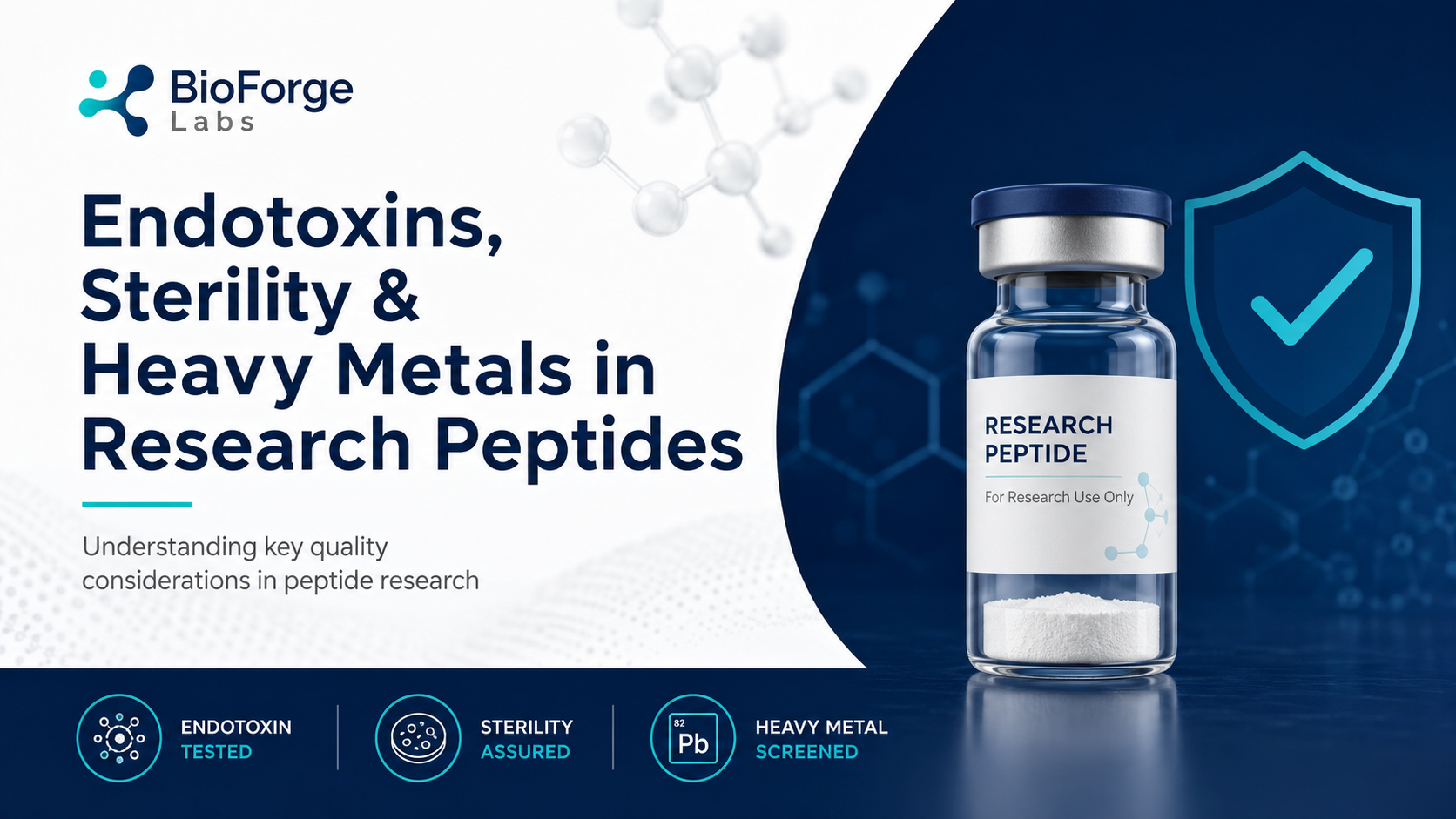
Endotoxins, Sterility & Heavy Metals in Research Peptides
When working with research peptides, quality control isn’t optional — it’s fundamental to obtaining reliable, reproducible results. Three often-underestimated contaminants — endotoxins, microbial contamination (sterility), and heavy metals — can significantly impact experimental outcomes. This guide explains what these are, why they matter for Australian researchers, and what levels are considered concerning. 1. Endotoxins: The
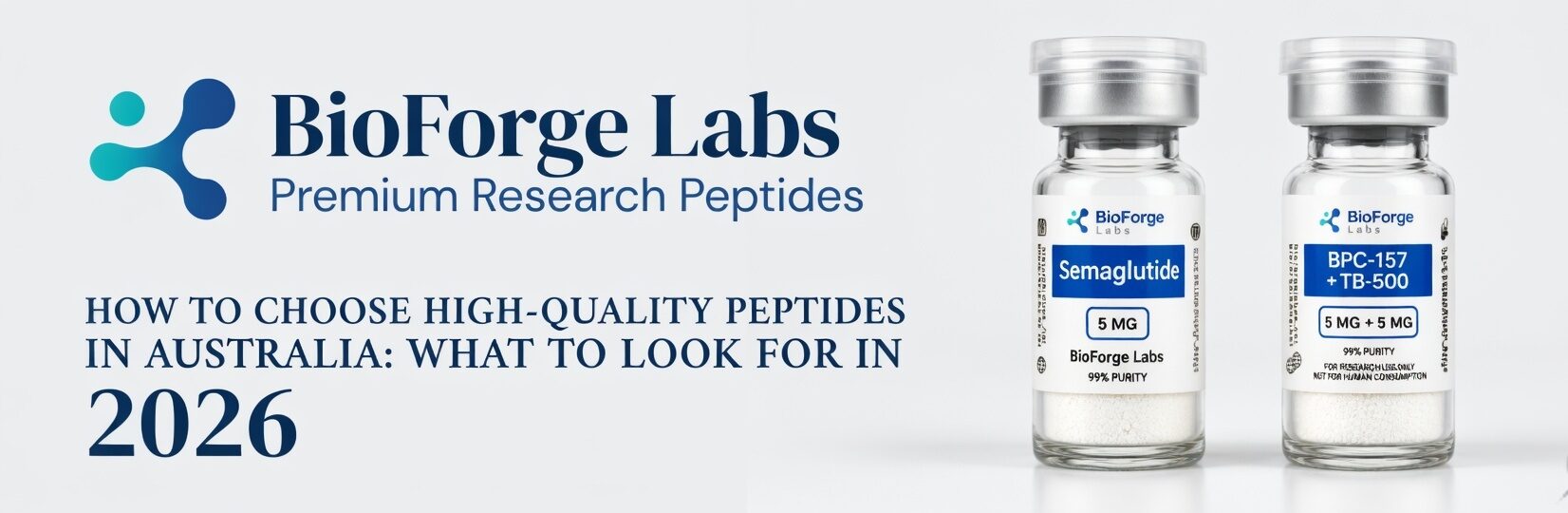
How to Choose High-Quality Peptides in Australia: What to Look For in 2026
In 2026, the demand for high-quality research peptides in Australia has surged, making it crucial for researchers to identify reliable suppliers. This guide emphasizes the importance of third-party testing, proper standards, and supplier transparency. It also highlights key red flags to avoid and suggests considerations specific to the Australian market for informed sourcing.
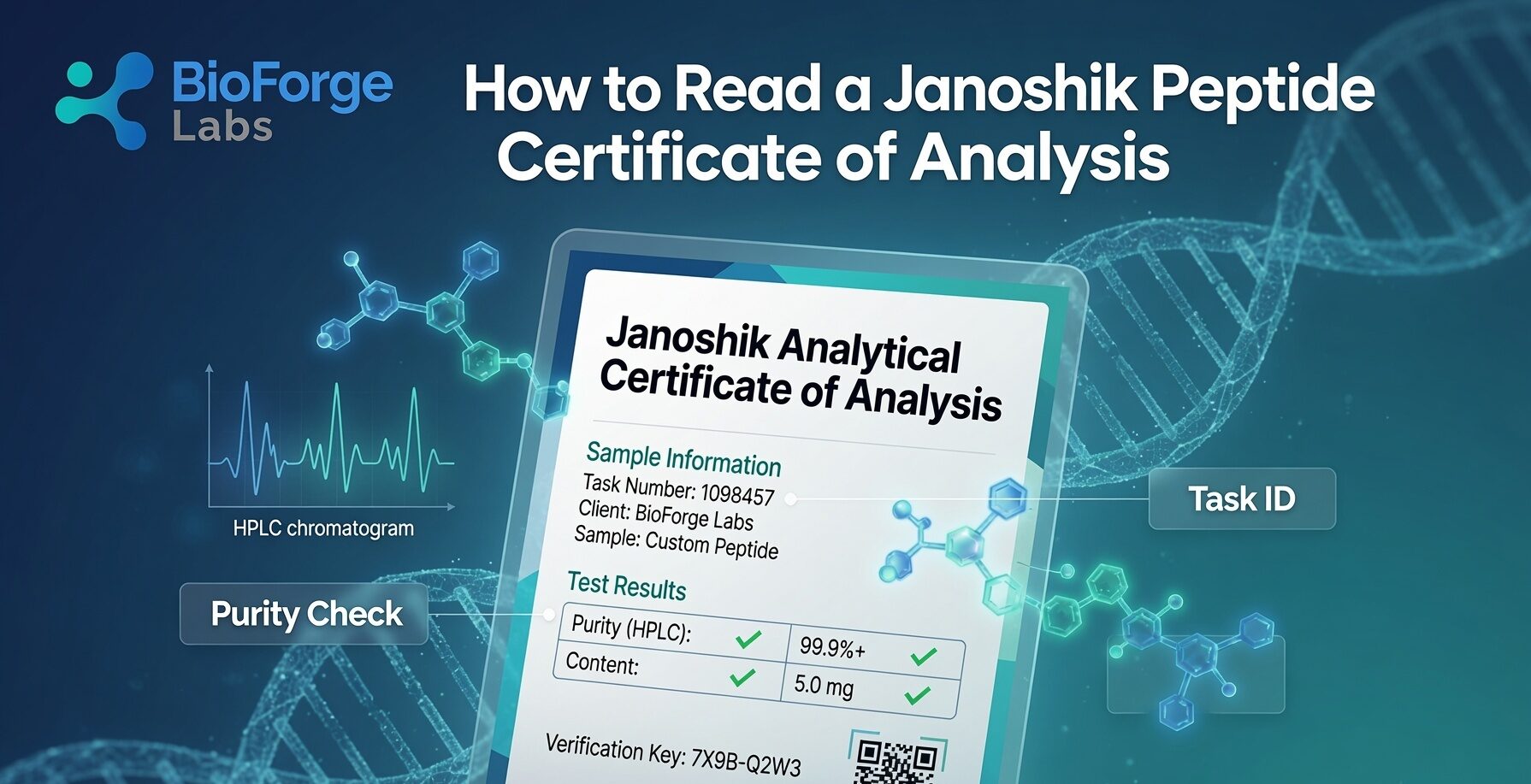
How to Read a Peptide Certificate of Analysis (CoA) | Janoshik Guide
A Certificate of Analysis (CoA) is crucial for purchasing research peptides, ensuring quality and transparency. BioForge Labs provides Janoshik CoAs, detailing identity, purity, and quantity of each batch. Key sections include sample information, weight verification, and HPLC purity testing. High-quality CoAs boost confidence in research materials and reproducibility.