Endotoxins, Sterility & Heavy Metals in Research Peptides
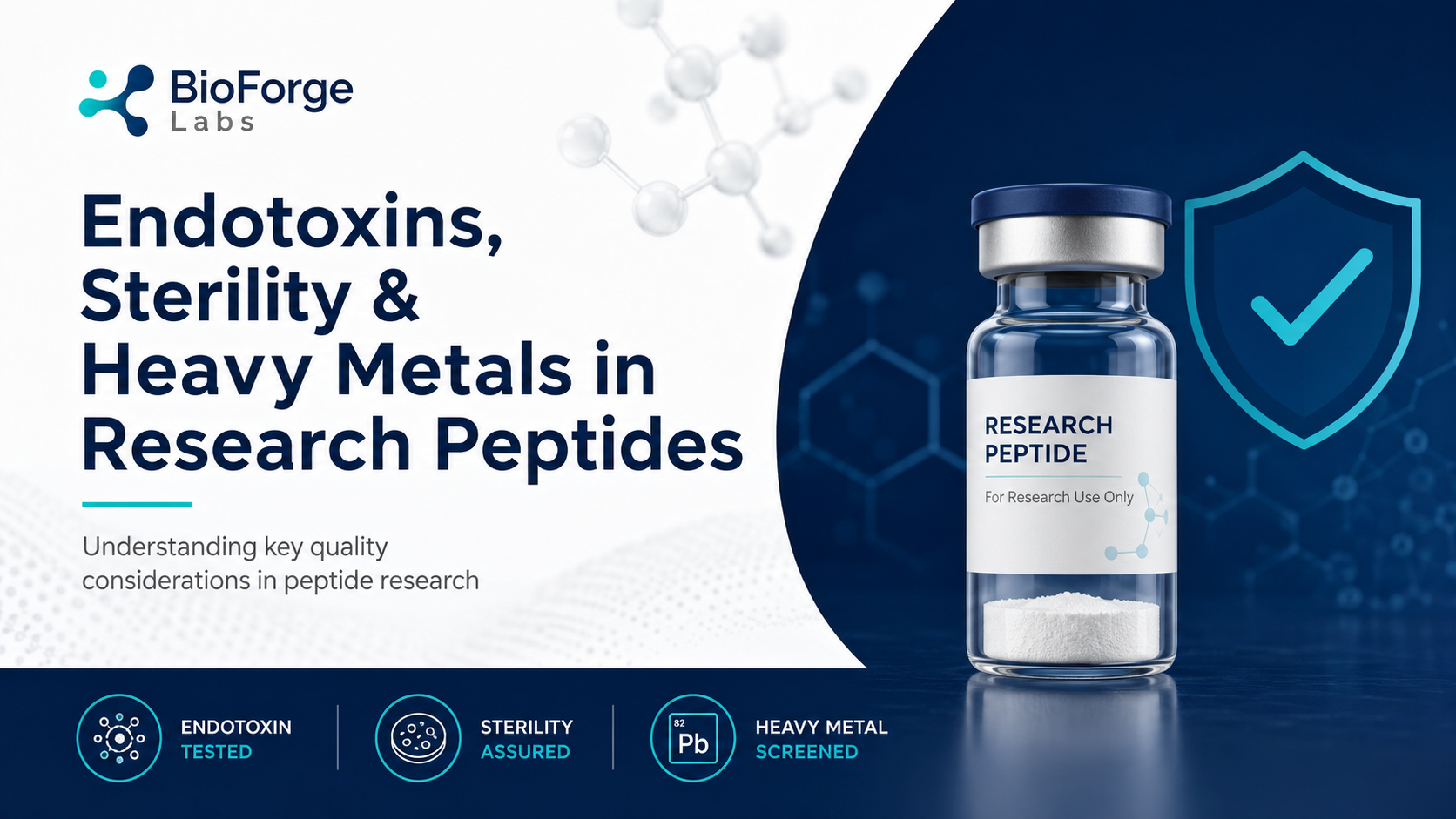
When working with research peptides, quality control isn’t optional — it’s fundamental to obtaining reliable, reproducible results. Three often-underestimated contaminants — endotoxins, microbial contamination (sterility), and heavy metals — can significantly impact experimental outcomes.
This guide explains what these are, why they matter for Australian researchers, and what levels are considered concerning.
1. Endotoxins: The Silent Interferer
Endotoxins are lipopolysaccharides (LPS) from the cell walls of Gram-negative bacteria. They are heat-stable and can persist even after purification.
Why endotoxins are problematic in research:
- Trigger strong inflammatory responses in cell cultures and in-vivo models
- Interfere with immune, metabolic, and cytokine studies
- Can cause high variability and false positives/negatives
Concerning Levels:
- Most researchers aim for <0.5 EU/mg (Endotoxin Units per milligram)
- Ideal for sensitive work: <0.1 EU/mg
- Levels above 1–5 EU/mg are generally considered unacceptable for high-quality research
High-quality suppliers routinely test and document endotoxin levels on their Certificates of Analysis.
2. Sterility: Preventing Microbial Contamination
Sterility ensures the absence of viable bacteria, fungi, and other microorganisms.
Risks of non-sterile peptides:
- Contaminated cultures leading to wasted experiments
- Unwanted microbial by-products affecting results
- Increased safety risks in the laboratory
What to Look For:
- Products manufactured under sterile conditions
- Final sterility testing where appropriate
- Proper aseptic packaging and cold-chain shipping
3. Heavy Metals: Hidden Contaminants
Heavy metals (lead, arsenic, mercury, cadmium, etc.) can enter during synthesis or from raw materials.
Impact on research:
- Enzyme inhibition and altered cellular signalling
- Toxicity in cell or animal models
- Compromised long-term study reliability
Acceptable Limits (typical research standards):
- Lead: <0.5–1 ppm
- Arsenic: <0.5 ppm
- Mercury: <0.1 ppm
- Cadmium: <0.3 ppm
Reputable suppliers provide heavy metal testing as part of their quality assurance.
How to Protect Your Research in Australia
When sourcing research peptides:
- Demand independent third-party testing (Janoshik or equivalent)
- Request full CoAs showing endotoxin, sterility, and heavy metal results
- Choose Australian-based suppliers for faster, better-controlled shipping
- Verify recent batch testing (not generic certificates)
At BioForge Labs, we prioritise these quality standards so researchers can focus on science instead of worrying about product integrity.
All products are sold strictly for research and laboratory use only.