BPC157 (Body Protection Compound-157) continues to be one of the most searched research peptides in Australia and worldwide. Known for its stability and potential regenerative properties, BPC157 has attracted significant attention from the scientific community. However, despite promising preclinical data, human clinical research on BPC157 remains limited as of mid-2026.
This article provides a balanced overview of the current state of BPC157 research, what human trials exist, and the exciting opportunities that lie ahead for laboratory and clinical investigation.
What is BPC157?
BPC157 is a synthetic 15-amino acid peptide derived from a protective protein found in human gastric juice. It is highly stable in gastric acid, which makes it unique among peptides for research purposes. In laboratory settings, BPC157 is studied for its potential cytoprotective, regenerative, and anti-inflammatory effects across multiple tissue types.
Researchers primarily investigate BPC157 in in vitro (cell culture) and in vivo (animal) models to explore its mechanisms related to tissue healing, angiogenesis (new blood vessel formation), and modulation of inflammatory pathways.
Preclinical Research: Strong Foundation
The majority of robust data on BPC157 comes from preclinical studies. Over the past three decades, researchers have published hundreds of animal and cell-based studies showing consistent effects, including:
Accelerated healing of tendons, ligaments, and muscles
Improved recovery from bone fractures
Protection of gastrointestinal tissues
Modulation of inflammatory cytokines
Enhanced growth hormone receptor expression in certain tissues
These studies suggest BPC157 may influence multiple healing pathways, such as focal adhesion kinase (FAK), vascular endothelial growth factor (VEGF), and nitric oxide systems. Many researchers find these results compelling enough to warrant further investigation in controlled human settings.
Current Human Clinical Data on BPC157
Human research is still in its early stages. As of June 2026, the evidence is limited to a small number of low-quality studies:
1. Knee Pain Retrospective Study (2021) A small U.S.-based retrospective case series involving 12 patients receiving intra-articular BPC157 injections for chronic knee pain reported that 7 out of 12 experienced pain relief lasting over six months. This study lacked a control group, randomization, and blinding, limiting its scientific weight.
2. Interstitial Cystitis Pilot Study Another small retrospective study reported symptom improvement in women with bladder pain after BPC157 treatment. Again, methodological limitations were significant.
3. Intravenous Safety Observation (2025) A very small report (n=2) suggested intravenous BPC157 was well-tolerated with no immediate adverse effects.
4. Ongoing Phase 2 Trial (Hamstring Strain) As of early 2026, a randomized, double-blind, placebo-controlled Phase 2 trial is recruiting participants to evaluate BPC157 for acute grade II hamstring muscle strains. This represents one of the first properly designed human trials for musculoskeletal applications and could provide valuable data on efficacy and safety if completed successfully.
Additionally, an earlier Phase I safety and pharmacokinetics trial (NCT02637284) was conducted around 2015 but had its results withdrawn before full publication.
Overall Assessment: There are currently no large-scale, high-quality randomized controlled trials (RCTs) published for BPC157 in humans. Most existing human data comes from small, uncontrolled pilot studies. This creates both a challenge and a major opportunity for the research community.
Research Opportunities for BPC157
The limited human data highlights several important areas where future research is needed:
Large Randomized Controlled Trials (RCTs): Well-designed Phase 2 and Phase 3 studies on tendon, ligament, and muscle injuries.
Optimal Dosing and Delivery Methods: Comparing oral, injectable, and topical applications in humans.
Long-term Safety Profiles: Extended studies monitoring potential side effects over months or years.
Mechanistic Studies: Better understanding how BPC157 interacts with human growth hormone receptors, nitric oxide pathways, and inflammatory cascades.
Combination Therapies: Investigating BPC157 alongside other research peptides (e.g., TB-500) or standard treatments.
Specific Conditions: Targeted research on gastrointestinal healing, neurological recovery, and sports-related injuries.
Australian researchers are particularly well-positioned to contribute to this field, given the strong local interest in regenerative science and access to high-quality research materials.
High-Purity BPC157 for Australian Research Laboratories
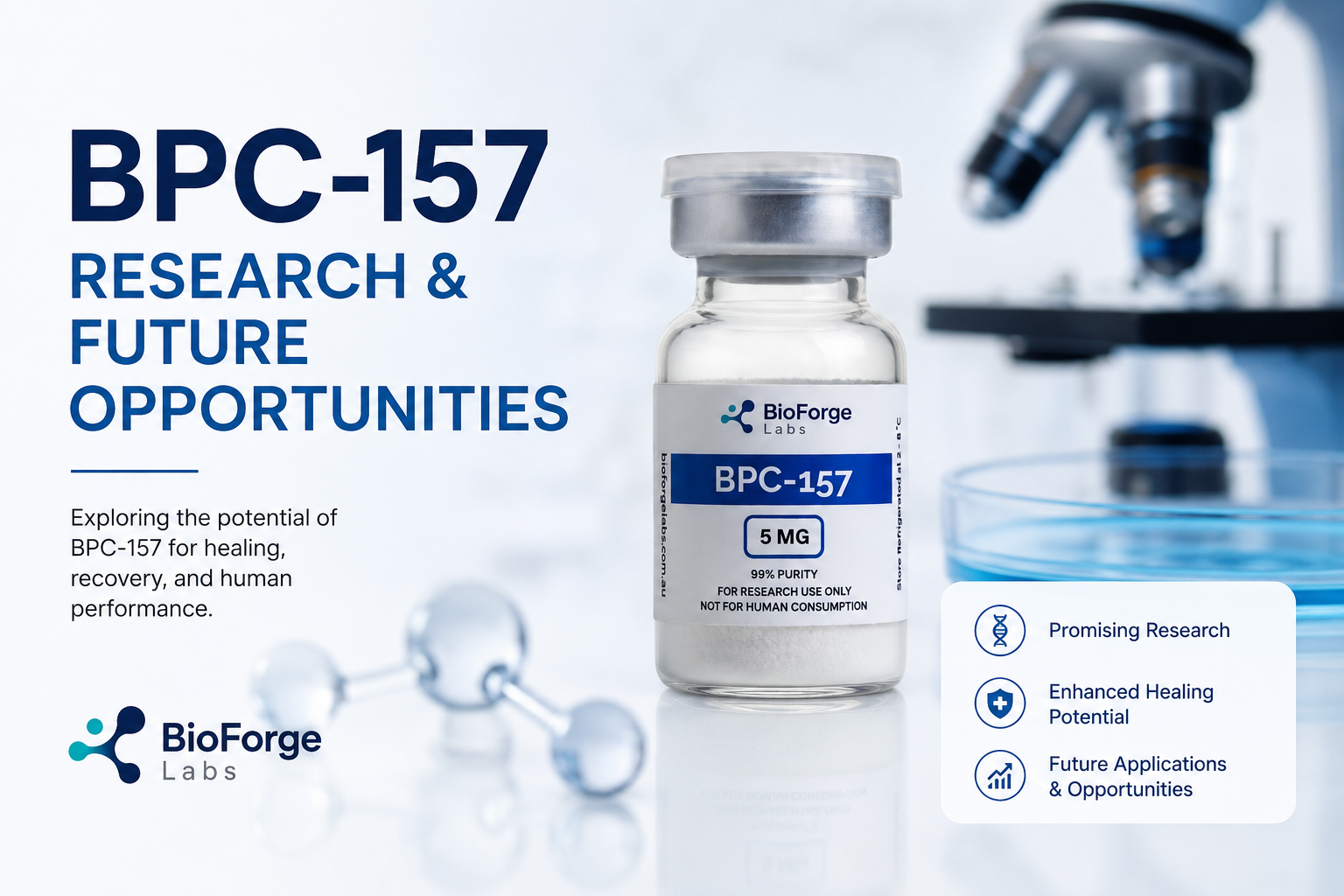
At BioForge Labs, we supply high-purity BPC157 (typically ≥98–99%) specifically for legitimate scientific and laboratory research in Australia. All batches are supported by independent testing documentation, including Certificates of Analysis (CoA), to help ensure reproducibility in your experiments.
Our BPC157 is provided as a lyophilized powder for maximum stability and is shipped with temperature-controlled packaging via Express Post for fast domestic delivery.
This product is sold strictly for research and laboratory use only. It is not intended for human consumption, therapeutic, diagnostic, or veterinary purposes.
Conclusion: Promising but Early Stage
BPC157 represents an intriguing research peptide with a strong preclinical foundation and growing interest from the scientific community. While current human data is limited and of low quality, the ongoing Phase 2 hamstring trial and calls for more rigorous studies suggest that the next few years could bring important new insights.
Researchers interested in tissue regeneration, inflammation, and cytoprotection will likely continue to explore BPC157 in controlled laboratory settings. As with all research compounds, high-quality materials, proper experimental design, and adherence to ethical standards are essential.
If you are a qualified researcher or laboratory in Australia looking for reliable BPC157, explore our range today. We are committed to supporting Australian science with consistent, well-documented research materials.